


PM Motor vs Induction Motor: What's the Difference?
Currently, two main types of motors dominate the new energy vehicle (NEV) market: Permanent Magnet Synchronous Motors (PM Motors) and AC Asynchronous Motors (Induction Motors). While PM motors are highly favored by domestic NEV manufacturers and see widespread application, induction motors are relatively less common. This trend isn't limited to domestic users; globally, PM motors have largely taken the lead.
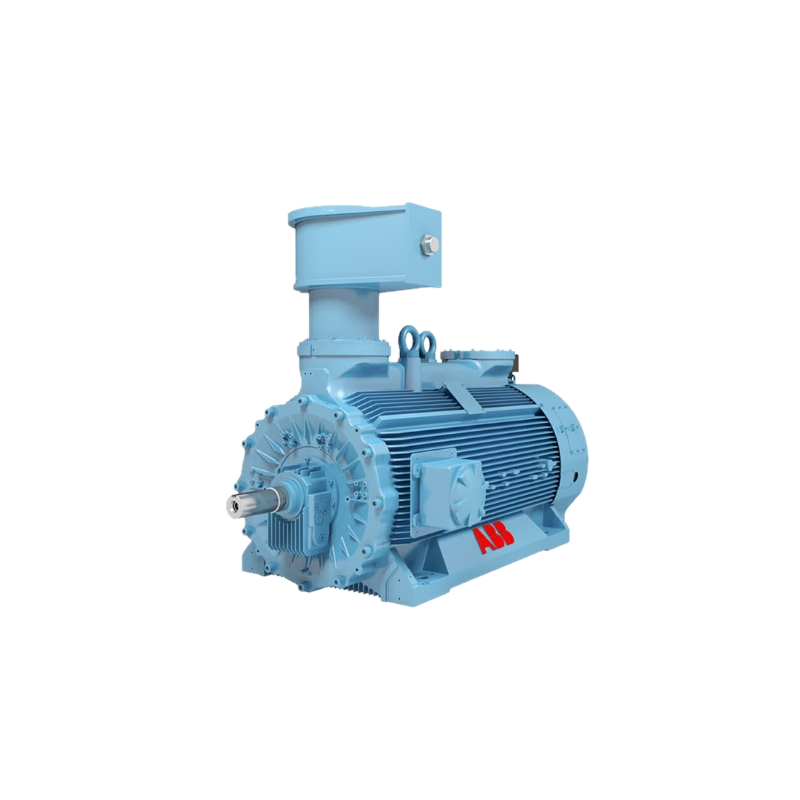
But why have so many new energy and traditional automakers chosen permanent magnet synchronous motors? As leading Synchronous Motor Manufacturers, we are here to break down the key differences between PM motors and induction motors.
If you have any questions about our products, please feel free to contact us.
Related Products:
- Slip Ring Motors
- Large Synchronous Motors
- Three-Phase Asynchronous Motors
- Induction Motors
- Permanent Magnet Synchronous Motors
PM Motor vs Induction Motor: Key Differences
1. Structural Differences
Structurally, PM motors are more complex and have higher manufacturing costs compared to induction motors. However, they offer significant advantages in size and weight, boasting a much smaller volume and lighter weight.
A PM motor primarily consists of a rotor, an end cover, and a stator. While its stator is very similar to that of a standard induction motor, its rotor design is unique. High-quality permanent magnets are mounted on the rotor, which generates the rotating magnetic field when energized.
In contrast, an induction motor consists of a stator and a rotor, along with auxiliary components like end covers and cooling fans. Notably, in an induction motor, the stator acts as the armature, generating the excitation rotating magnetic field and drawing electrical energy directly from the power supply.
2. Different Working Principles
The working principles of these two motors also differ significantly. A PM motor is excited by permanent magnets to create a synchronous rotating magnetic field. When operating as a motor, a three-phase symmetrical current is applied to the stator. Because the stator windings are spaced 120 degrees apart, they generate a spatial rotating magnetic field. Under the influence of electromagnetic force, the rotor follows this field, converting electrical energy into kinetic energy. (Conversely, when operating as a generator, the rotor's kinetic energy is converted back into electrical energy).
An AC Induction Motor, on the other hand, feeds symmetrical alternating current into the three-phase stator windings to generate a rotating magnetic field. This field cuts across the rotor windings, inducing a current within them. The interaction between this induced current and the stator's rotating magnetic field generates an electromagnetic force (torque) on the motor shaft, driving the rotor to rotate in the same direction as the magnetic field. Simply put, when the rotor conductors cut through the magnetic field lines, the resulting induced current works in tandem with the induced magnetic field to drive the motor.
Contact us to get more details on our motor solutions.
3. Raw Materials and Supply Chain
Finally, the raw materials required for these motors play a crucial role in their market adoption. PM motors rely on rare earth materials, such as neodymium-iron-boron (NdFeB) magnets. These rare earth resources are relatively scarce in Europe and the United States. In contrast, China holds approximately 70% of the world's rare earth reserves and accounts for 80% of global production, giving domestic manufacturers a significant supply chain advantage.